
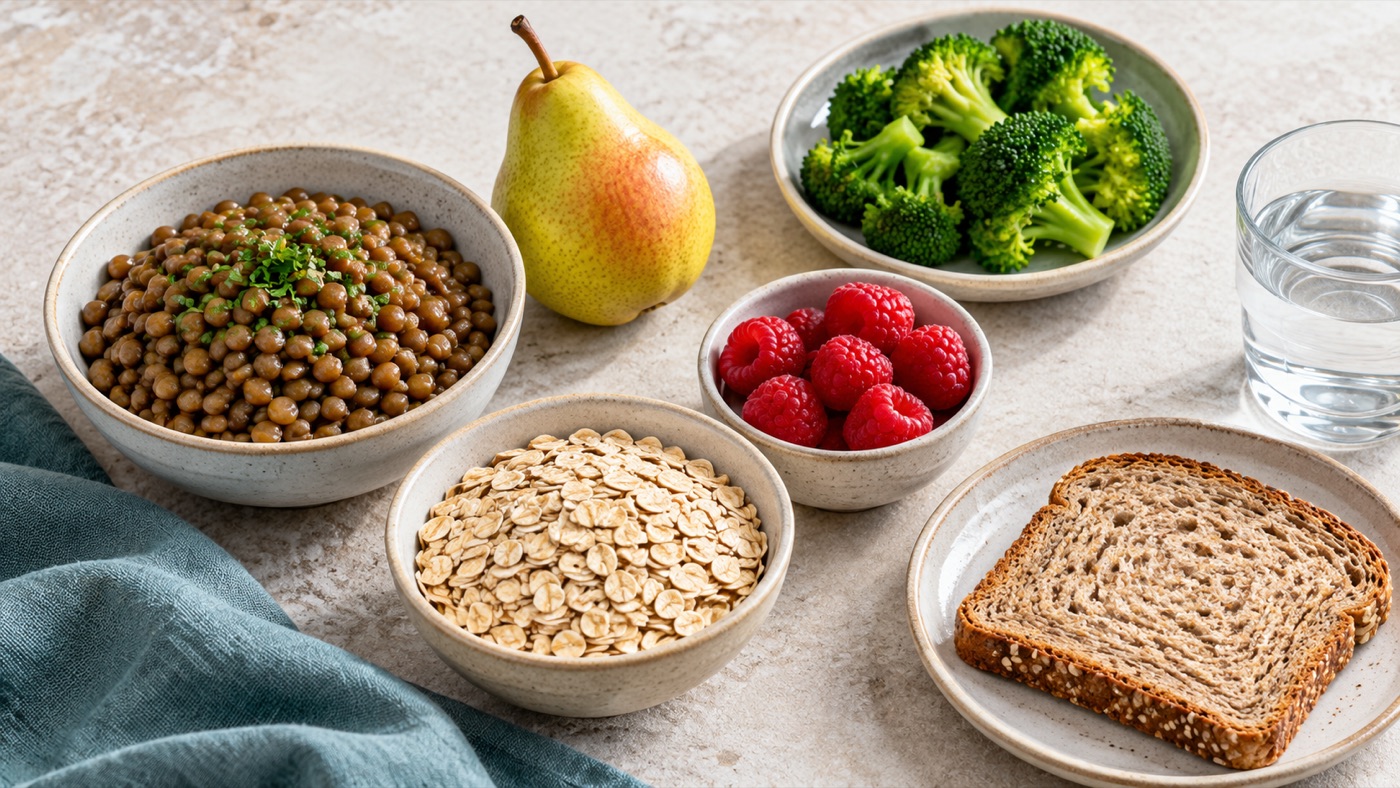
Adding fiber does not have to mean replacing every meal or buying a large supplement tub. Start with the foods you already eat, choose one manageable change, and notice how your digestion responds. The goal is a varied eating pattern you can maintain.
What fiber does—and why the type matters
Fiber is the part of plant foods that your body does not digest or absorb in the usual way. Soluble fiber dissolves in water; some forms create a gel that can slow digestion and help with cholesterol or blood-sugar control. Insoluble fiber does not dissolve and helps move material through the bowel. Most fiber-rich plants contain a mixture. Mayo Clinic explains the differences.
That does not mean every type of fiber produces every benefit. FDA’s labeling framework recognizes naturally occurring plant fiber and certain added fibers with evidence of beneficial physiological effects. A product’s fiber number alone does not establish that it will improve your cholesterol, resolve symptoms, or cause weight loss. FDA describes what can count as dietary fiber on a label.
Make the first change small enough to repeat
NIDDK recommends increasing fiber a little at a time so your body can adjust, and getting enough liquid to help it work. Fluid needs vary with health and activity; follow any individual fluid guidance you have been given. Read NIDDK’s food and hydration guidance.
Here are three ways to turn that advice into a normal day. Choose one initially rather than adding all three at once:
- At breakfast: add some berries to oatmeal or another cereal you already enjoy.
- At lunch: include a small portion of lentils or beans in a soup, salad, or grain bowl.
- For a snack: choose a pear or apple with its skin if tolerated, instead of relying only on juice.
These are examples, not a required menu. Beans, whole grains, fruits, vegetables, and nuts are all options, so the plan can reflect preferences, allergies, and access. A clinician or dietitian can help set an appropriate daily amount. NIDDK lists a range of fiber-containing foods.
Read the label in the context of the food
When comparing two cereals or breads, check the serving size before comparing fiber grams. Then ask whether the serving matches what you normally eat. A larger printed number is less useful if it describes twice the portion.
Look at the ingredient list as well. Added fiber may contribute to the labeled total, but does not make every packaged product nutritionally identical to beans, vegetables, or whole grains. Whole foods supply a broader mix of nutrients; supplements can have a role when a healthcare professional recommends one. Mayo Clinic discusses whole foods and supplements.
What if more fiber makes you uncomfortable?
A rapid increase may lead to gas, bloating, or cramping. Build up gradually instead of trying to hit a large target immediately. If symptoms persist, ask for help assessing the cause and the type or amount of fiber that suits you. More is not automatically better for every digestive problem. Mayo Clinic’s practical advice includes a gradual increase.
Bring a short record of meals, recent dietary changes, and symptoms to your next appointment. For patients in Milton, our gut-health and nutrition consultation page explains how to prepare for that discussion. You can also explore how preventive care connects findings with a useful plan.
Sources and further reading
- Mayo Clinic: Dietary fiber—essential for a healthy diet
- NIDDK: Eating, diet, and nutrition for constipation
- FDA: Questions and answers on dietary fiber
Patient education from OlympusMD Wellness in Milton, Georgia. Sources checked October 29, 2026. This article provides general information and does not replace an individual medical evaluation.

