Understand your gut · Plan your next step
A clearer picture of digestion. A practical conversation about your health.
Explore how your gut works, what microbiome research tells us, and which questions to bring to a consultation. OlympusMD Wellness offers nutrition, health coaching and medical consultations in Milton, Georgia.
Education by OlympusMD Wellness · Updated November 10, 2026
12635 Crabapple Rd, Suite 140 · Open 7 days
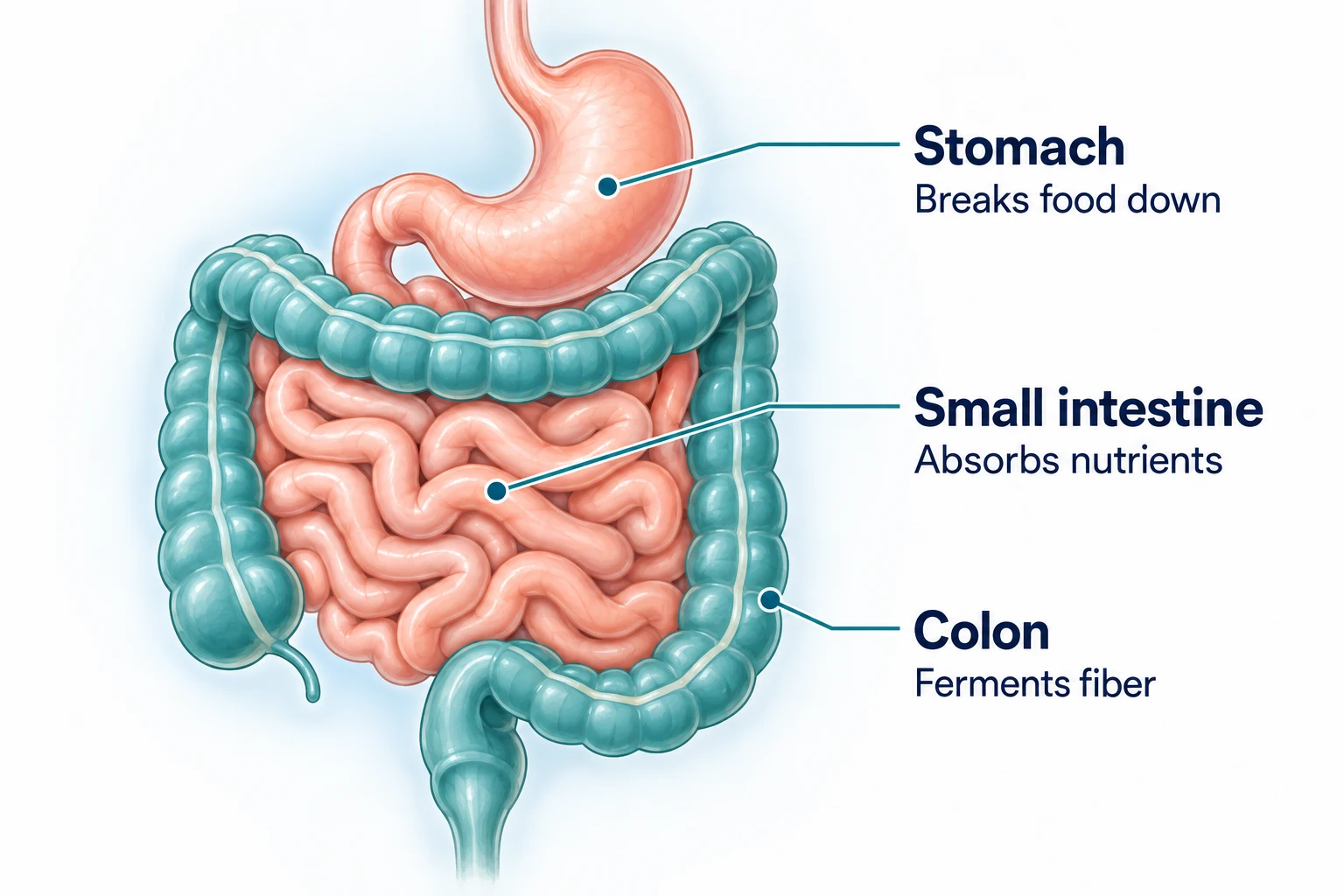
Start with the basics
It includes digestion, bowel function, the intestinal lining and the microbes living in the digestive tract. A symptom or a single test cannot describe all of those at once.
Bloating, constipation, diarrhea and discomfort can have several causes. Describe the timing, meals, medicines and bowel changes you notice. A recurring symptom is a useful starting point for evaluation; it does not identify a particular “microbiome imbalance.” NIDDK: evaluating lactose intolerance
The microbiome
The gut contains a community of bacteria and other microorganisms. Researchers study what these organisms do, how they interact with food and the immune system, and how those relationships differ between people.
Diversity is one research measure. It is not a stand-alone score that tells you whether your gut is healthy or which supplement you need. Commercial microbiome profiles have limited established value for routine clinical decisions. International consensus on microbiome testing (2025)
A Stanford dietary study analyzed 36 generally healthy adults after a 10-week high-fiber or fermented-food intervention. The fermented-food group showed increased microbial diversity and reductions in several inflammatory markers. The primary cytokine-response outcome did not significantly change.
This small, short study measured biological markers. It did not establish that fermented foods treat digestive disease or prevent illness. People with several significant digestive conditions were excluded. Wastyk et al., Cell (2021): dietary intervention study
Gut hormones
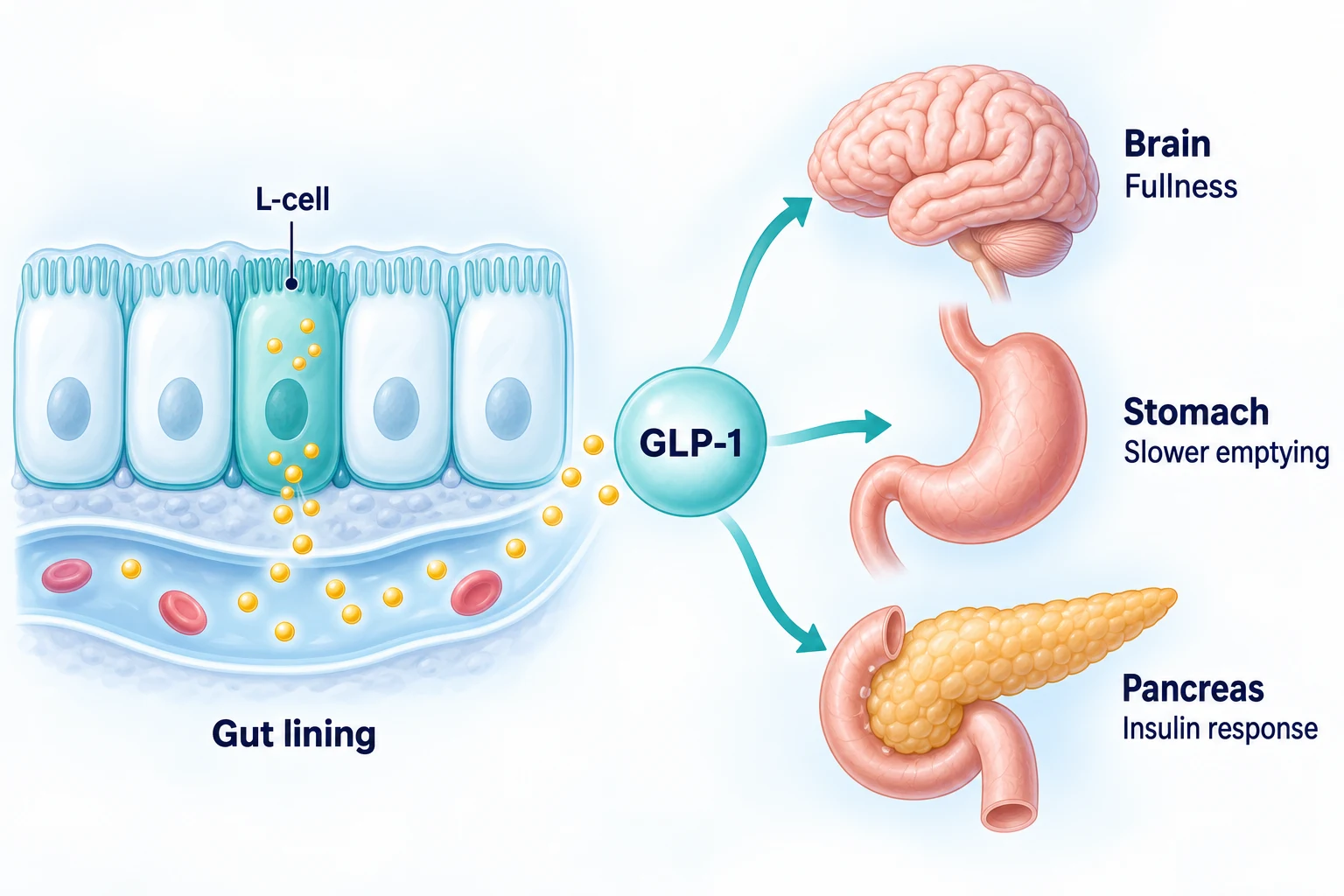
GLP-1 is one of the body’s signals involved in the response to a meal. Medicines that act at the GLP-1 receptor mimic aspects of that signal: they can increase insulin release as blood sugar rises, affect hunger, and slow movement of food out of the stomach. Mayo Clinic: GLP-1 medicines and digestion
That connection does not make a GLP-1 medicine a general treatment for “gut health.” Digestive side effects and a person’s medical history matter. If symptoms start or worsen during treatment, tell your prescribing clinician.
If weight is also a concern, our medical weight-management page explains the consultation process. Nutrition and coaching can be discussed alongside care, without requiring a separate gut-health program.
The intestinal barrier
The intestinal lining regulates what moves from the gut into the body. Changes in its permeability are a real subject of medical research. However, “leaky gut syndrome” is not an established clinical diagnosis that explains every instance of fatigue, bloating or food intolerance.
A useful evaluation looks for the cause of persistent symptoms and considers food, medicines, medical history and appropriate tests. A label alone does not establish a need for a cleanse, supplement protocol or investigational treatment. Harvard Health: understanding leaky gut
The gut–liver connection
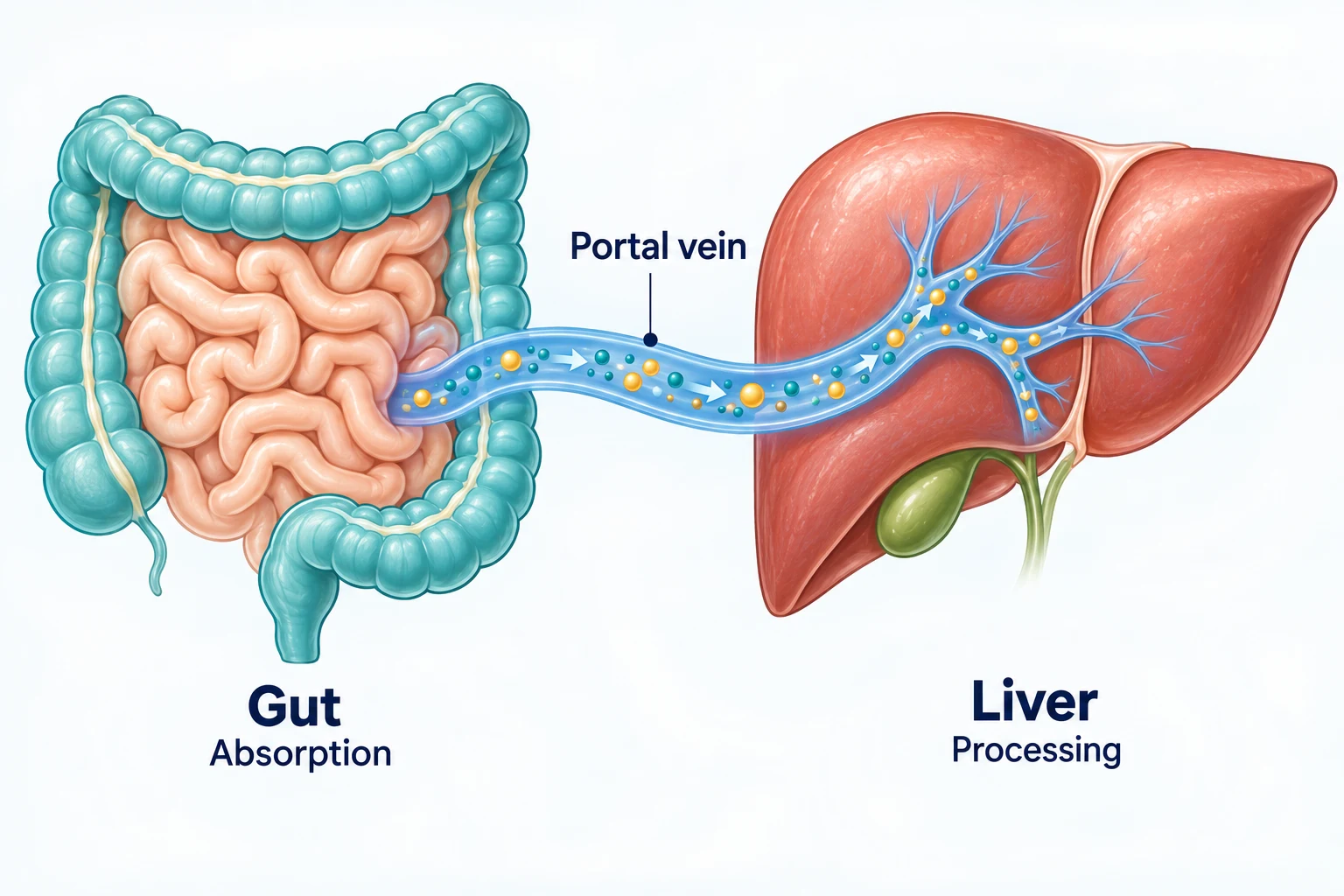
The liver processes many substances absorbed from the intestine. The illustration shows that connection in simplified form; it does not mean every absorbed nutrient takes the same route.
Metabolic dysfunction-associated steatotic liver disease, or MASLD, is a form of fatty liver disease associated with metabolic risk factors. Evaluation considers factors such as diabetes, weight, cholesterol, alcohol use and other causes of liver disease. Blood tests and imaging may help answer different questions. NIDDK: evaluating fatty liver disease
Normal liver enzymes alone do not rule out significant liver disease. Clinicians may assess fibrosis risk and recommend further evaluation when appropriate. Gut symptoms alone cannot diagnose MASLD. AASLD: assessment of fatty liver and fibrosis
Bring existing results to a visit before buying another panel. Our lab-testing information explains how to discuss testing with the team.
Practical food choices
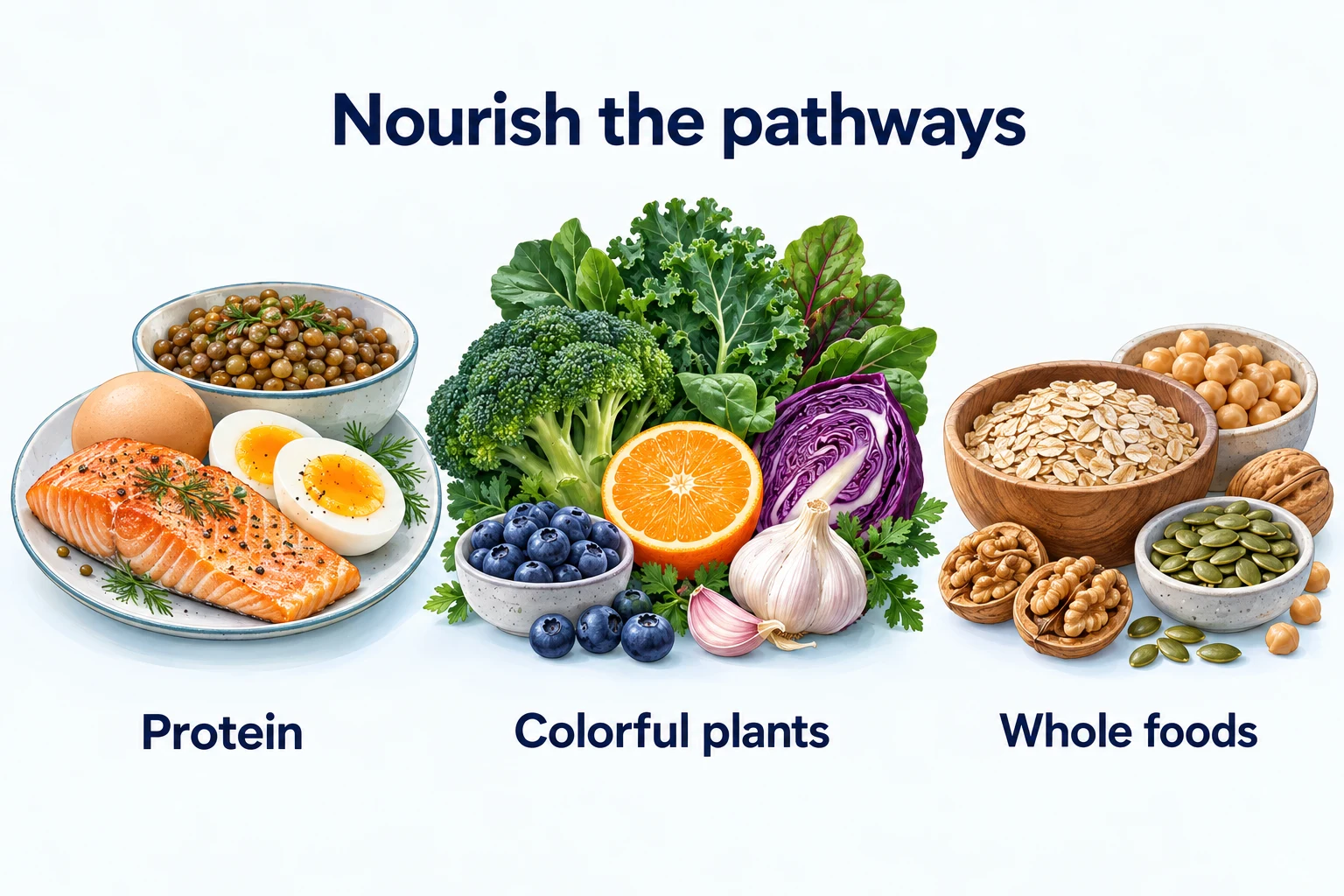
Beans, lentils, oats, vegetables, fruit and nuts can contribute fiber. Increase it in small steps and discuss fluid needs with your clinician. A sudden increase may be uncomfortable. If you have a prescribed diet or a digestive condition, tailor changes to your care plan. NIDDK: fiber, food and fluids
Our practical fiber guide offers a manageable way to begin.
Record the food, portion, timing and symptoms. If dairy seems involved, evaluation may include a dietary trial or a lactose breath test. Similar symptoms can have other causes. NIDDK: evaluating lactose intolerance
Coaching can help turn an agreed plan into grocery choices, meals and routines that work around your schedule, preferences and budget. Tell the team what you have already tried and what made it difficult.
Benefits depend on the organism, product and condition being studied. Evidence for one strain cannot be transferred to every “gut health” supplement. People with serious illness or weakened immune systems should discuss safety with a clinician. NIH NCCIH: probiotics, usefulness and safety
Research does not establish commercial detox diets or colon cleanses as a reliable way to eliminate toxins or create lasting weight loss. Some can cause harm. A specific medical concern deserves a specific evaluation. NIH NCCIH: detoxes and cleanses
Testing with a purpose
A stool test ordered to investigate a particular infection or condition answers a different question from a consumer microbiome profile. Before testing, ask what the result could establish and what action would follow. Expert consensus describes limited evidence for routine clinical use of microbiome profiling. International consensus on microbiome testing (2025)
A medication and supplement list, previous results, relevant diagnoses, food restrictions and a brief symptom record. Ask for visit-specific preparation instructions. Do not stop prescribed treatment on your own.
Your care in Milton
Start by telling us what you want help with: digestive concerns, nutrition habits, supplements or support alongside medical weight management. The team can help you choose the appropriate appointment.
Our team includes Gigi Samed, MD, MBA, Dan McCarthy, PA, and Tori McVay, BSN, RN, FMCHC. Tori’s work includes nursing and health coaching. Meet the team and read their backgrounds. OlympusMD is a medical wellness clinic; specialist gastroenterology care may be appropriate for some concerns.
Yes. Call and describe the symptoms and how long they have been present. The team can explain appointment options and whether another type of care is appropriate. Severe pain, blood in stool or other urgent symptoms need prompt medical attention.
No. Bring any existing results. A clinical history and a clear question should guide whether testing is useful; a consumer profile is not a universal starting point.
No. Fermented foods are made using microorganisms, and some contain live cultures. Probiotic products contain particular live microorganisms; evidence is specific to the organisms and the condition studied. Neither category guarantees a benefit for every person. Read the NIH explanation.
A website cannot determine the cause. Similar symptoms occur in different conditions. A clinician can review your history and decide whether testing, dietary assessment or specialist evaluation is needed. Read about overlapping digestive symptoms.
No. You may book a weight-management consultation separately. Nutrition and coaching can be discussed as additional support. Prescription decisions require an in-person medical evaluation and depend on medical appropriateness.
Visit 12635 Crabapple Rd, Suite 140, Milton, GA 30004. Ask about suitable follow-up or coaching visits by telehealth. Availability depends on the visit and the professional’s scope and licensure. Prescriptions at OlympusMD require an in-person visit.
OlympusMD does not accept or bill insurance. Ask about consultation costs and any separately recommended testing or services. HSA/FSA eligibility depends on your plan and the service.
Find more patient questions in our searchable Wellness Blog.
Prepared as patient education by OlympusMD Wellness. Updated November 10, 2026. Sources appear beside the claims they support. This information does not replace an individual medical evaluation. Illustrations are conceptual explanations, not diagnostic images.
OlympusMD Wellness · Milton, Georgia
Come as you are. We’ll meet you there.
Call our Milton team to discuss gut health, nutrition, and the right appointment for your goals. We can explain the consultation process, visit options, and current availability.
12635 Crabapple Rd, Suite 140
Milton, GA 30004
Between Smoke on the Farm and Orangetheory Fitness.
Monday–Friday: 9 a.m.–6 p.m.
Saturday–Sunday: 9 a.m.–4 p.m.
Holiday hours may vary.
Insurance & payment: OlympusMD Wellness does not accept or bill insurance. HSA/FSA eligibility depends on your plan. Ask our team about current services, payment options, and visit requirements.